
Brief History
The symbolism of Aphrodite and Kythira has traveled through the centuries, appearing in 18th-century paintings such as Jean-Antoine Watteau’s “The Embarkation for Cythera”, being referenced in Renaissance poetry, inspiring Charles Baudelaire in the 19th century, and later finding expression in the cinematic vision of Theo Angelopoulos, never ceasing to signify “something”.
Homer mentions Kythira in his epic work, the Iliad.
According to Hesiod’s Theogony, Aphrodite, the goddess of love, was born in the sea of Kythira and first set foot on land on the island. Since then, Kythira has been referred to as “záthea,” meaning sacred.
Isidore (a geographer of the 1st century AD) put forward a more unconventional view, suggesting that the island took its name from Cytherian Aphrodite, rather than the other way around. He was also the first to discuss the significance of the verb keúthō and its connection to the goddess and the island. Keúthō means “to conceal love,” while those who fall in love on the island are said to discover a hidden, passionate desire.
The most famous mythological couple, Paris and Helen, after her abduction, are said to have sought refuge in Kythira, in the fairy cave of Mylopotamos. One of the most impressive chambers of the cave is named “the Baths of Aphrodite.”
Other important ancient writers also refer to the island by the name Kythira. Among them are Herodotus and Dionysius, and even Aristotle, who acknowledges that the island was once called Porphyrousa, due to the processing of purple dye. Xenophon, in his Hellenica, also uses the term “Cytherian land.”
You don’t go to Kythira with a fixed plan, like you might on other islands.
What to visit:
North side of the island
Moudari Lighthouse
The lighthouse of Moudari is located at the northern end of Kythira at Spathi Cape. It was built in 1857 by the English and is one of the largest lighthouses in Greece with a height of 25 meters. The view from the lighthouse is breathtaking especially at sunset. Some days a lighthouse keeper is there so if you contact them, you may be able to go to the top of it.
Agios Nikolaos
beach is located at the northern end of Kythira and is a medium-sized beach. At the western end of the beach ends a gorge with lush vegetation and running water. On the east side of the beach the visitor will see in the background “Fanari”, the large stone lighthouse at the northern end of the island.
Platia Ammos
beach is located on the north side of the island, in the homonymous village. Like its name, it consists of a wide fine sandy beach, overlooking the mountains of the Peloponnese.
Karavas and Amir Ali springs
One of the greenest and most picturesque villages of the island. At this point in Kythira you will plunge into a small oasis with springs and running water. Do not forget to visit the homonymous traditional Karavas bakery where you will find crunchy traditional rusks!
Northeast part of the island
Kakia Lagada gorge
The gorge of Kakia Lagada stretches from the village of Trifyllianika to Agia Pelagia. It passes by the ruined Byzantine Castle City of Paleochora. Paleochora with the 13th-century buildings, was the Byzantine capital of the island and is located in the northern part of a steep cliff, which appears in the middle of the gorge.The end of the gorge is the beach of Kakia Lagada, from which the famous pirate Hairedin Barbarossa invaded, right next to the beach of Lorenzo in the area of Agia Pelagia.
Agia Pelagia
For many years it was the port of the island. The view to Neapolis, Peloponnese is enchanting especially at night. There are taverns, cafes and tourist shops along the coastal road.
Potamos
is one of the largest villages on the island with its mansions and their special architecture. Here you will find bakery, traditional cafes and taverns around the old square and of course every Sunday the traditional market, where you can get traditional products such as salt, oil, honey, pastries and herbs.
Fourni Beach
is located on the north and east coast of Kithira, next to the south part of Plateia Ammos beach, and is of medium size. It consists of fine pebbles and coarse sand and overlooks the Myrtos Sea.
Southern part of the island
Aroniadika
at the crossroad of the two main roads of the island. The village is of medium size, picturesque and characterized traditional with the stone-built mansions of the 18th century and the courtyards with the bougainvilleas. Its architecture has strong influences of the two dominant trends that prevail on the island, the northern influenced by the Peloponnese with tiled roofs and the southern influenced by Crete, resulting in a very interesting aesthetic and stylish result.
Paleochora
is the ruined medieval old capital of Kithira, which during the Byzantine era was called Agios Dimitrios. This small town was built in the 12th century by Monemvasia people on the northeastern side of the island, on a large cliff. It stands at the top of the mountain, in front of the magnificent gorge Kakia Lagada, where two ravines join. It is Located 100 meters above the sea level. Paleochora is fortified and is located at a lower level than the surrounding hills to be in visible from the sea and therefore protected from frequent pirate attacks. Despite the natural protection of the state and its fortification, the famous Turkish pirate Haireddin Barbarossa managed to discover in 1537. He burned the whole state and sold the inhabitants as slaves. The place was considered cursed since then and was never inhabited again. In Paleochora today there are ruins of fortifications and a large number of buildings. Everything shows that a great castle city was located here. Among the ruins are the remains of nine churches. Some of them have very interesting interior decoration.
Chora
South of the island you will find the Chora of the island. At a strategic location, it is built on the top of a mountain with incredible views in all directions. There are many old mansions here, some of which may be the oldest on the island. The narrow streets and the inner courtyards create a wonderful atmosphere that is completed with the imposing presence of the large Venetian castle.
Kapsali
After Chora you will find Kapsali. It is the cosmopolitan place of Kithira and is a pole of attraction for young people not only for the nightlife it offers, but for its remarkable cultural sites as well. Its location offers a wonderful view of the Castle, the monastery of the evangelist John where it is said that he began to write the revelation before departing for Patmos, and to the south the islet of Chytra with the Cretan Sea. From Kapsali there are guided tours to the islet of Chytra, inside of which there is a large cave with blue fluorescent waters and seals.
Chalkos beach
is the most popular beach with deep blue-green waters and gravel. It is organized and easily accessible. There is also space for your own umbrella but it would be wise to go there early as it attracts a lot of people throughout the day.
Melidoni
In the southwest of the island and at the foot of the mountain of Agia Elesa is the hidden beach of Melidoni. The beach is considered one of the three best on the island and is a must-go destination for visitors to Kithira.It is a small cove with fine sand combined with small pebbles, crystal clear deep waters and views of the rocky islet of Chytra. Melidoni is quite protected from the wind and so you will be able to enjoy your bath without worries. The beach is relatively organized as it has umbrellas and sunbeds and a canteen that will provide you with the essentials (water, coffee, snacks, etc.) while often hosts beach parties.
Eastern part of the island
Kaladi beach
the most photographed beach of the island. Overlooking it, this small beach has pebbles and crystal clear blue waters. Prepare with all the necessities as there are no sunbeds or canteen on the beach. After you reach and photograph the view of the beach from above which is fantastic you will have to go down the stairs. But do not be disappointed as the beach will compensate you with its beauty. It consists of 3 parts (you reach the third part through a cave from the second beach). The seabed is incredible so if you love snorkeling do not forget your mask!
Palaiopolis - Skandeia
One of the most remarkable parts of Kithira is Palaiopolis and its wider area. In this wonderful corner of the island, history and mythology meet, while man and nature have coexisted for centuries! Initially, the area has been inhabited since ancient times, since the Phoenicians were the first to live there when they arrived on the island to collect the purple for theΜ. Then the city of ancient Skandeia was created in the area (hence the name of a part of the area) where according to historical data it was lost at sea after the eruption of the volcano of Santorini. Remains of that time are still preserved and the remains of the city at the bottom of the sea are clearly visible. The settlers of Kithira were the Minoans where they created a sanctuary of the top in the place where the Holy Temple of Agios Georgios is located on the imposing mountain above Palaiopolis. There are still the remains of the ancient city and the baths of Helen of Troy together with the sanctuary of the goddess Aphrodite since according to Hesiod the Goddess emerged from the waters of Palaiopolis. Today Palaiopolis is one of the best tourist resorts and consists of three beaches, Piazza, Skandeia or Vothonas and Limni.
Avlemonas
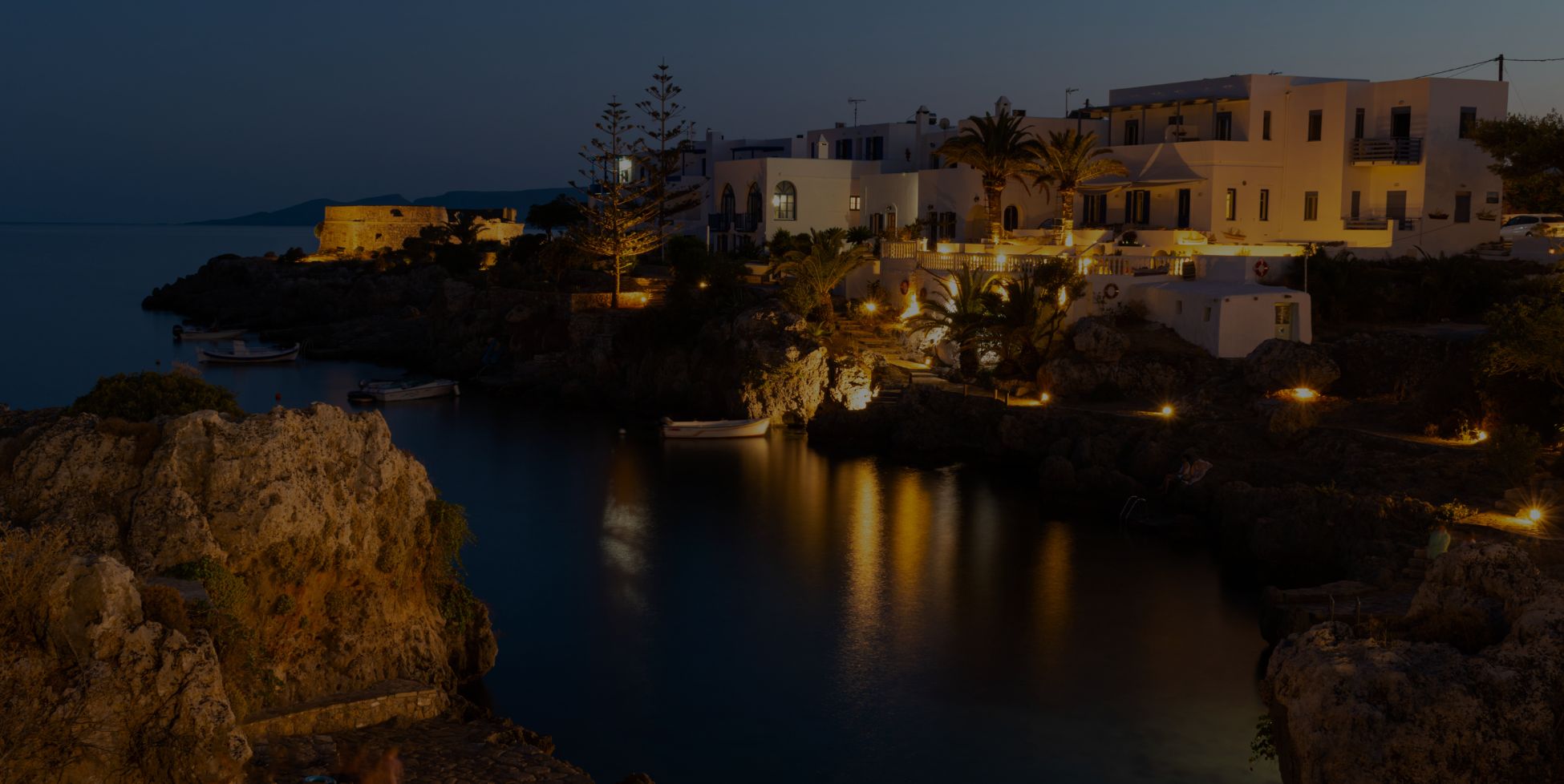
The fishing village of our heart. The picturesque village next to Palaiopolis with its rocky ground and the Cycladic aura. You will not only come here for a swim in its creek which is like a swimming pool but you will also be able to walk the paved paths from morning until late at night. The village offers everything. Accommodation, taverns, breakfast, sweets and cocktails with live music.
Kobonada
Here you will be enchanted by the turquoise of the water, the white pebbles and the wild beauty of the landscape overlooking Avlemonas. The beach is organized but there is plenty of space to bring your own equipment.
Fyrri ammos
Another beach with wild beauty. You will realize it before you even arrive watching it from above as you drive. Quite a large beach ensures you some distance from other swimmers. It also has a small cave that you can visit for photos.
Diakofti
Turquoise waters and white sand as if you were on an exotic island! Wonderful waters with the shipwreck on the background, one of the most famous sights of Kithira. The beach in Diakofti is ideal for families and those travelling with young children, thanks to its warm and shallow waters.
West of the island
Mylopotamos
is the most traditional village of Kithira, with many traditions and legends associated with its name. Built in one of the most beautiful locations of Kithira, It consists of the settlements of Agios Sostis, Araioi, Piso Pigadi, Riza and Kato Chora, a ruined Venetian settlement, where the Venetian castle with the lion of Agios Markos dominates at the entrance. In addition to the traditional architecture, the village has a wonderful nature, many attractions, Byzantine temples and religious monuments. “Kamari”, where the island’s largest laundries are located and “Neraida” or “Fonissa” waterfall which is the most photographed part of the island, the Mills just below and the cave of Agia Sofia, are just some of the reasons that will make you fall in love with this place, while the Monastery of Panagia Orphani offers a wonderful view of the Ionian Sea. A tour of the village and coffee in a traditional cafe under the plane trees, is a must.
Kalami
is one of the smallest and most picturesque beaches on the island, overlooking the Ionian Sea. It consists of thick and fine pebbles, has a horseshoe shape and is surrounded by steep high cliffs. The route to the beach passes through the traditional village of Mylopotamos, one of the most beautiful villages, continues to the monastery of Panagia Orfani where the road stops, and continues the path to the top of a steep slope that leads to the magnificent beach. The descent to the cliff requires attention and appropriate shoes!
Limnionas
to distance of 7 km from Mylopotamos is the beach of Limionas, a small quiet bay, surrounded by traditional cells for fishermen boats, composing the scenery of an authentic fishing village. At the back of Limionas there is the area of Alatarea, where the salt is collected. It is a wild place, without any vegetation. It consists of vertical rock formations at the base of which water is collected in ponds that when evaporated salt remains and is collected. Undoubtedly this is a special landscape. From there starts a path to the baths of Aphrodite (the green lagoon).
Lykodimou
Small beach in the west of the island. Wild landscape with brown-reddish rocks and amazing seabed. The beach is narrow with a cave in the center. It has a canteen and its orientation will give you incredible scenes especially at sunset.
Panagia Myrtidiotissa Monastery
In the Holy Pilgrimage of Panagia Myrtidiotissa is the most important relic of the Kitherian tradition and heritage. Here was found and kept the sacred and miraculous icon of the Virgin Mary who was called Myrtidiotissa due to the area overgrown with myrtles and is the symbol of the Orthodox faith of thousands of Kytherians. The image of Myrtidiotissa enjoys the utmost honor and reverence from the inhabitants but also from abroad and all over Greece. Tradition tells of the finding of the image around the 13th century by a shepherd, a scene which was incorporated into the lower belt of the garment of the image. According to the tradition, the Virgin Mary herself appeared in the shepherd’s sleep. The complex of the Monastery consists of: a) the Katholikon in the center which belongs to the type of three-aisled basilica with a raised central aisle, narthex and vestibule (woman) on the lower level of which is the original (first) church of Panagia with the niche of the Find of the Holy Icon, b) a multitude of cells arranged north and south of the Katholikon and which mainly accommodate the faithful for the fast of the 15th of August (decapentism), c) formations on the fronts of the four floors, d) chapel of the Holy Trinity, one-room vaulted roof, of post-Byzantine times, e) museum of icons and f) library – reading room. The original church of Panagia has been adapted to the natural configuration of a rocky opening in which there is a shallow niche in the north to host the icon of Panagia Myrtidiotissa, a place that commemorates the place where the shepherd found her. The newest Catholic Church in its current form began to be built in 1841 and was completed in 1857.
Agios Nikolas Krasas
A picturesque church of Kithira is perched on a rock, a few meters above the sea, in the area of Mavros Vrachos SW of Myrtidiotissa. the area attracts many visitors for a special reason. The sunset from there is wonderful and even more spectacular than this of Santorini, as a lot of visitors claim.
You don’t just visit Kythira. You experience it and remember it like no other island.
You’ll return with ladopaximadia and fatourada in your boot, sharing them with friends as you tell them how it was—about the trails you walked, the island’s myths and stories, and the places you discovered. You’ll show them photos of Byzantine chapels and waterfalls, of secluded beaches and long walks, of exploration, relaxation, and everything else that draws each person to an island like Kythira.
So let’s start with the basics:
Prior to your holidays here make sure you have booked your tickets as seats are usually sold out and have a transport means as you are going to need it. Kythira is a big island and whether you are a driving person or not its aura will certainly make you want to explore more and more of it.
Since 2015 year
Ut condimentum magna ut augue elementum ornare. Fusce posuere massa vitae maximus posuere. Mauris sagittis consectetur vulputate. Curabitur commodo est quis felis porttitor eleifend. Sed efficitur sem mi, et feugiat lorem scelerisque.

High Rating
Vestibulum a blandit ex, in tempor dolor. Phasellus dolor nisl, volutpat sit amet mollis hendrerit, pharetra eget ex ipsum et primis.

Free Cancellation
Vestibulum a blandit ex, in tempor dolor. Phasellus dolor nisl, volutpat sit amet mollis hendrerit, pharetra eget ex ipsum et primis.

Quiet Hours
Vestibulum a blandit ex, in tempor dolor. Phasellus dolor nisl, volutpat sit amet mollis hendrerit, pharetra eget ex ipsum et primis.

Payment Options
Vestibulum a blandit ex, in tempor dolor. Phasellus dolor nisl, volutpat sit amet mollis hendrerit, pharetra eget ex ipsum et primis.

Best Locations
Vestibulum a blandit ex, in tempor dolor. Phasellus dolor nisl, volutpat sit amet mollis hendrerit, pharetra eget ex ipsum et primis.

Special Offers
Vestibulum a blandit ex, in tempor dolor. Phasellus dolor nisl, volutpat sit amet mollis hendrerit, pharetra eget ex ipsum et primis.
Things to do near
Ut condimentum magna ut augue elementum ornare. Fusce posuere massa vitae maximus posuere. Mauris sagittis consectetur vulputate. Curabitur commodo est quis felis porttitor eleifend. Sed efficitur sem mi, et feugiat lorem scelerisque.
No posts were found for provided query parameters.
No posts were found for provided query parameters.